
Table of Contents
- Why Sizing This Right Actually Matters
- The Math Behind Runtime
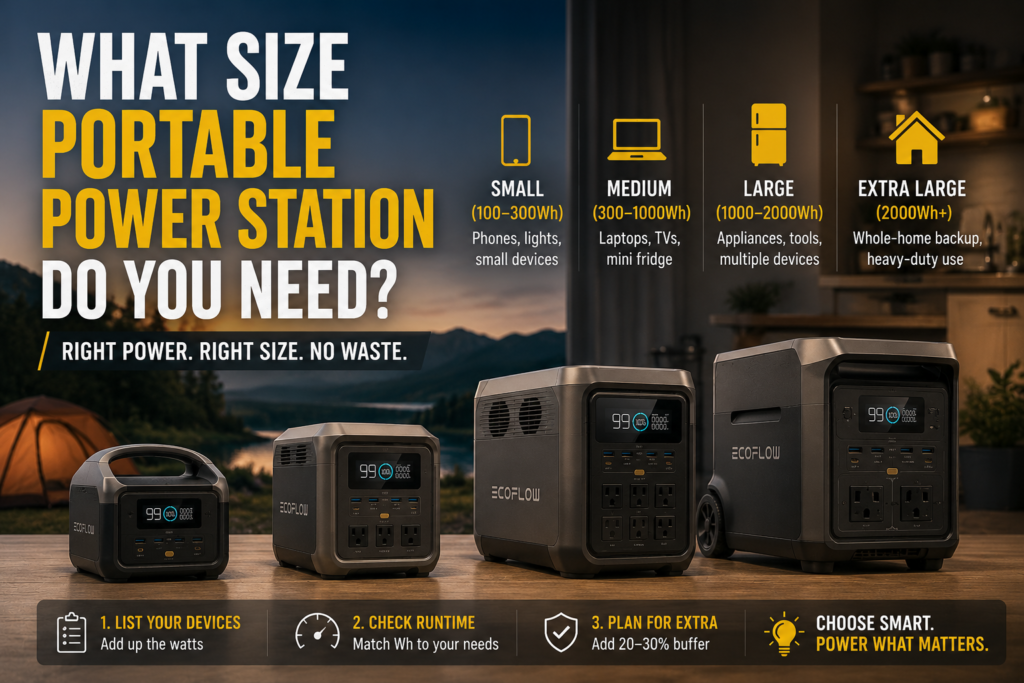
- Compact: For Phones, Laptops and Small Devices
- Mid-Range: For Weekend Trips and Short Outages
- Large Capacity: For Home Backup and Extended Use
- Watt-Hours Are Not the Whole Story
- A Simple Way to Decide
- Comparison at a Glance
- Frequently Asked Questions
- The Bottom Line
Why Sizing This Right Actually Matters
Buy too small, and your power station runs out right when you need it. Buy too large, and you pay for capacity that sits unused most of the time, often a difference of hundreds of dollars.
Getting the size right comes down to one honest question: what are you actually planning to power, and for how long?
The Math Behind Runtime
Runtime is not complicated once you have two numbers: your battery’s watt-hour capacity, and the wattage of what you are running. A rough formula is runtime equals watt-hours times 0.9, divided by device watts, with the 0.9 accounting for typical inverter loss.
So a 1,000Wh station running a 50-watt laptop works out to roughly 18 hours of runtime. That same station running a 72-watt television would last closer to 12 to 13 hours. The math scales directly, bigger loads simply eat through capacity faster.
Compact: For Phones, Laptops and Small Devices
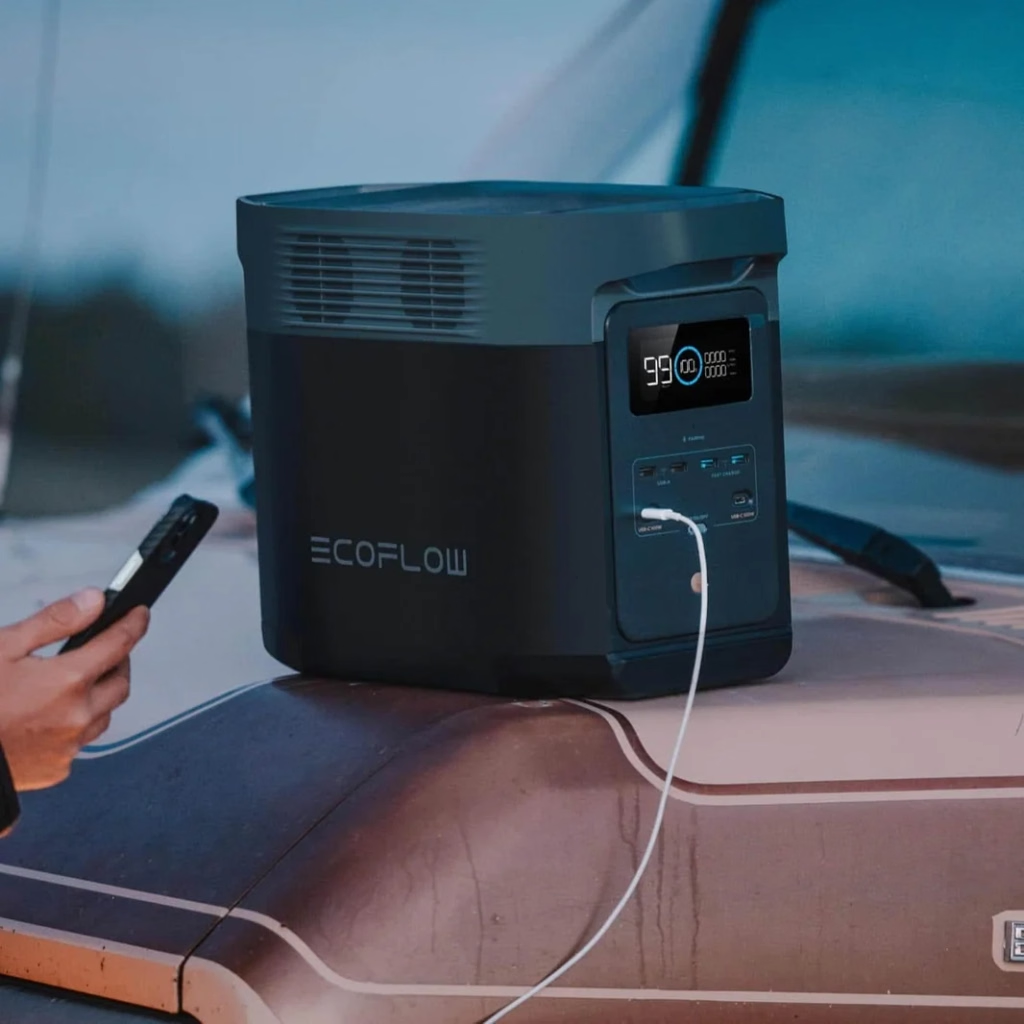
If you mainly need to keep phones, a laptop, or small electronics charged, you do not need a large unit. A compact station in the roughly 286Wh range with 600W AC output comfortably handles laptops, phones, and other small appliances, and models in this class are usually light enough to carry easily, often around 10 pounds.


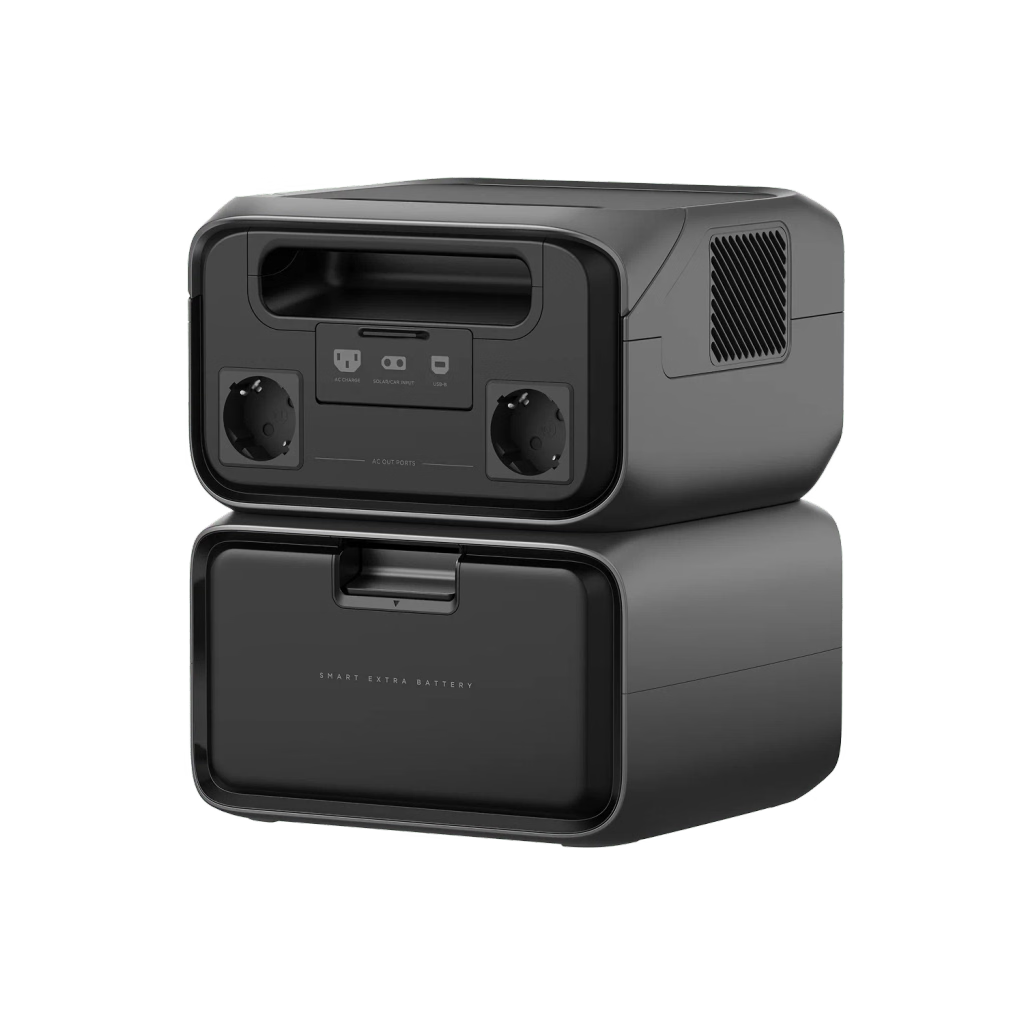
This size is best for last-minute getaways, day trips, or unexpected short outages, not for running a fridge or major appliances for hours at a stretch.
Mid-Range: For Weekend Trips and Short Outages
Once you start thinking about camping trips, van life, or a short home outage covering a few essentials, capacity needs to jump significantly. A mid-range unit around 1,000Wh with roughly 1,800W continuous output covers laptops, monitors, lighting, and small kitchen appliances for a full day of use.
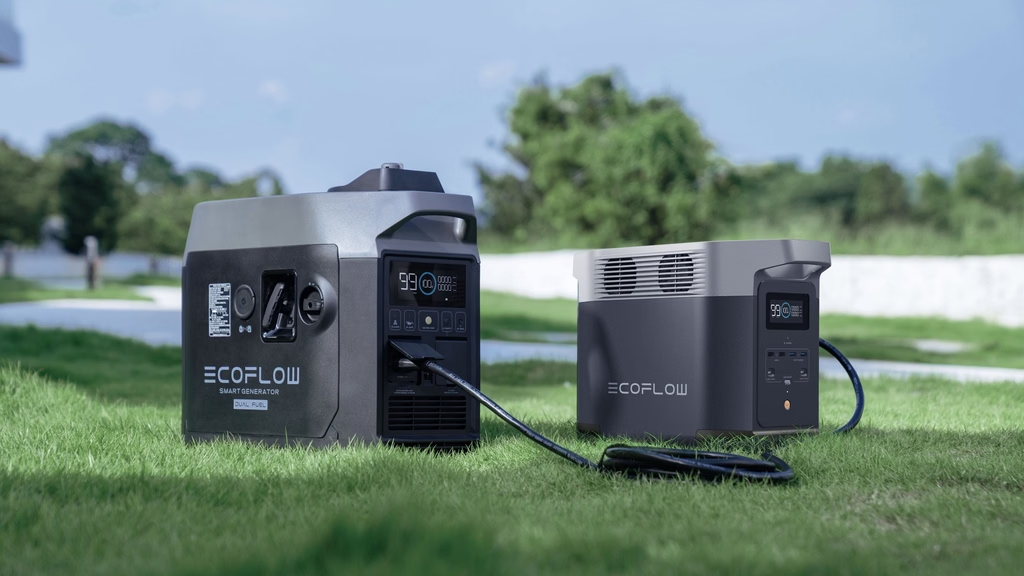

One real-world test tracked a laptop, monitor, and LED lighting running for a full eight-hour workday, which used roughly 840Wh, close to the full capacity of a 1,000Wh unit in a single day. If your use case includes a real workday or a weekend off-grid, this is the range to be looking at.
Large Capacity: For Home Backup and Extended Use
If the goal is keeping a fridge, router, and multiple devices running through a real outage, capacity requirements rise sharply. Stations under roughly 1,200Wh generally do not provide sufficient runtime for a fridge alone, and for longer outages, 1,500Wh or more with 1,800W+ output is closer to the realistic minimum.
For whole-home backup or serious off-grid setups, capacity climbs even further, into the 3,600Wh to 4,000Wh-plus range, often expandable with additional battery packs.

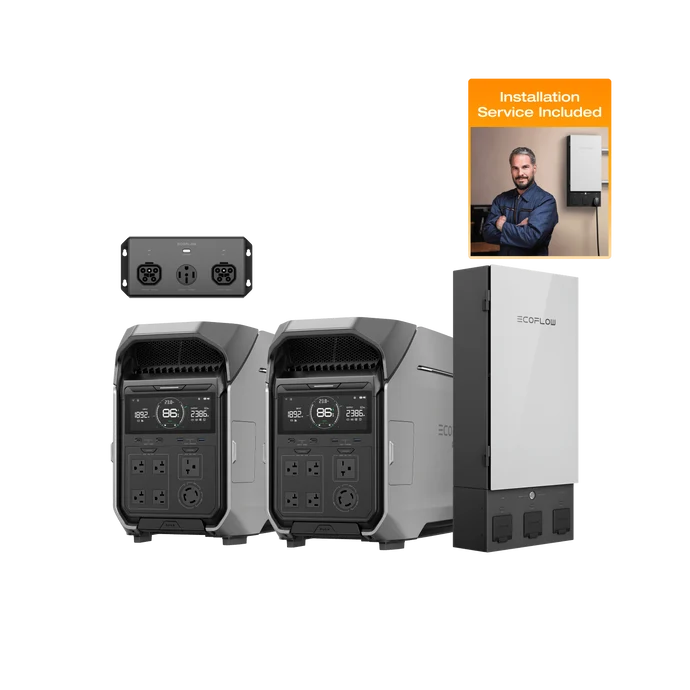
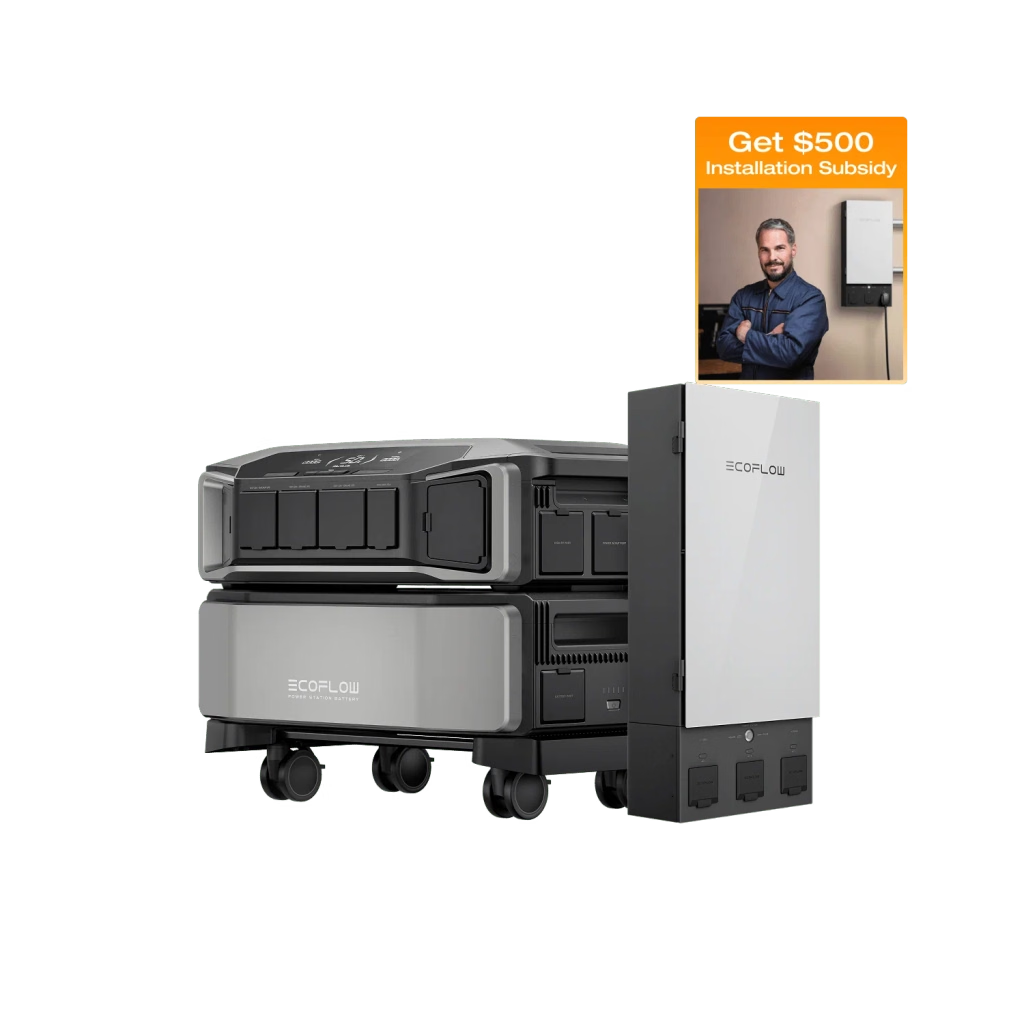
In one tested example, a station in this class was able to power a fridge, router, laptop, lights, and phones for 12 to 16 hours during a real outage, the kind of runtime that actually matters when the power is out overnight.
Watt-Hours Are Not the Whole Story
Capacity is only half the equation. Continuous wattage rating matters just as much, and it is easy to confuse with surge wattage. Surge ratings, sometimes double the continuous rating, only apply for a few seconds during motor startup, not sustained use.
Check the continuous wattage rating specifically against what you plan to run, not the surge number, since that is the figure that determines whether a device will actually run reliably for any length of time.
It is also worth knowing that stations lose a small amount of charge simply sitting idle, generally a low single-digit percentage per week depending on the model. If a station is meant purely for emergency backup, checking and topping up the charge periodically prevents an unpleasant surprise when you actually need it.
A Simple Way to Decide
Start with what you actually plan to power, not the biggest number on the spec sheet. List your devices, add up their wattage, estimate how many hours you need them running, and work backward from there using the runtime formula above.
If you are still unsure, it is almost always smarter to size slightly up rather than slightly down. A power station with headroom you rarely use is a minor inefficiency. One that runs out mid-outage or mid-trip is a real problem.
Comparison at a Glance
| Category | Typical Capacity | Continuous Output | Best For |
|---|---|---|---|
| Compact | ~245 to 300Wh | 300 to 600W | Phones, laptops, short trips |
| Mid-Range | ~1,000Wh | 1,800W | Weekend camping, short outages, full workday |
| Large | 1,500 to 2,000Wh | 1,800W+ | Fridge and multi-device backup during outages |
| Whole-Home | 3,600Wh+ | High, often expandable | Extended or whole-home backup |
Frequently Asked Questions
How do I calculate how long a power station will last? Multiply the watt-hour capacity by 0.9, then divide by the wattage of your device. A 1,000Wh station running a 50-watt laptop lasts roughly 18 hours using this formula.
What size power station do I need to run a fridge during an outage? Generally at least 1,500Wh with 1,800W or higher continuous output. Capacities under about 1,200Wh typically do not provide sufficient runtime for a fridge alone.
Is surge wattage the same as continuous wattage? No. Surge wattage only applies for a few seconds during motor startup. Continuous wattage is the number that determines whether a device can run reliably for extended periods.
Do portable power stations lose charge just sitting unused? Yes, a small amount, typically a low single-digit percentage per week depending on the model. If it is stored for emergency use, checking and topping up the charge periodically is worth doing.
Is it better to buy slightly bigger or slightly smaller than I think I need? Slightly bigger, generally. Extra headroom you rarely use is a minor cost. Running out of power during an outage or trip is a bigger problem.
The Bottom Line
The right portable power station size comes down to matching real capacity to real use, not buying the biggest number available. Compact units cover phones and laptops. Mid-range capacity handles weekend trips and short outages. Larger, expandable systems are built for real home backup, fridge included. Do the runtime math with your actual devices before deciding, and when in doubt, size up rather than down.
Ready to compare current models and pricing? Explore EcoFlow’s lineup here.