
Table of Contents
- Why “Slim” Doesn’t Have to Mean “Limited”
- Card Capacity: The Number That Actually Matters
- Fast Access Beats Digging Every Time
- Material Choice Changes Everything
- RFID Protection Should Come Standard
- The Pocket Test Most Wallets Fail
- Expandability: Room to Grow If You Need It
- Comparison at a Glance
- Frequently Asked Questions
- The Bottom Line
Why “Slim” Doesn’t Have to Mean “Limited”
There’s a common assumption that going slim means giving something up, fewer cards, no cash storage, more friction just to pay for coffee. That assumption is mostly outdated. The best slim wallets today aren’t just smaller versions of a bifold, they’re a genuine redesign, built to remove the bulk of a traditional wallet, thick stitching, wasted card slots, folded receipts, without sacrificing what you actually use daily.
The gap between a good slim wallet and a frustrating one comes down to a specific set of features, not just thinness for its own sake.
Card Capacity: The Number That Actually Matters
Most slim wallets hold somewhere between 4 and 12 cards, but the real question isn’t the maximum, it’s how many you’ll actually carry comfortably day to day. Ekster’s lineup, for example, holds up to 14 cards and bills across its range, but testing consistently shows 6 to 7 cards is the real sweet spot for a genuinely slim, comfortable carry, even when the wallet technically supports more.
That distinction matters when comparing spec sheets. A wallet advertising “14 cards” isn’t necessarily better than one advertising “8” if the 8-card version stays thin and comfortable while the 14-card version only reaches that number by expanding noticeably in your pocket.
Fast Access Beats Digging Every Time
A slim wallet with no fast access mechanism just moves the same old problem, digging through slots, into a smaller space. A patented card ejection mechanism, the kind found in Ekster’s Cardholder Pro and Wallet Pro, fans your cards out at the push of a button, genuinely faster than flipping open a bifold and searching manually.
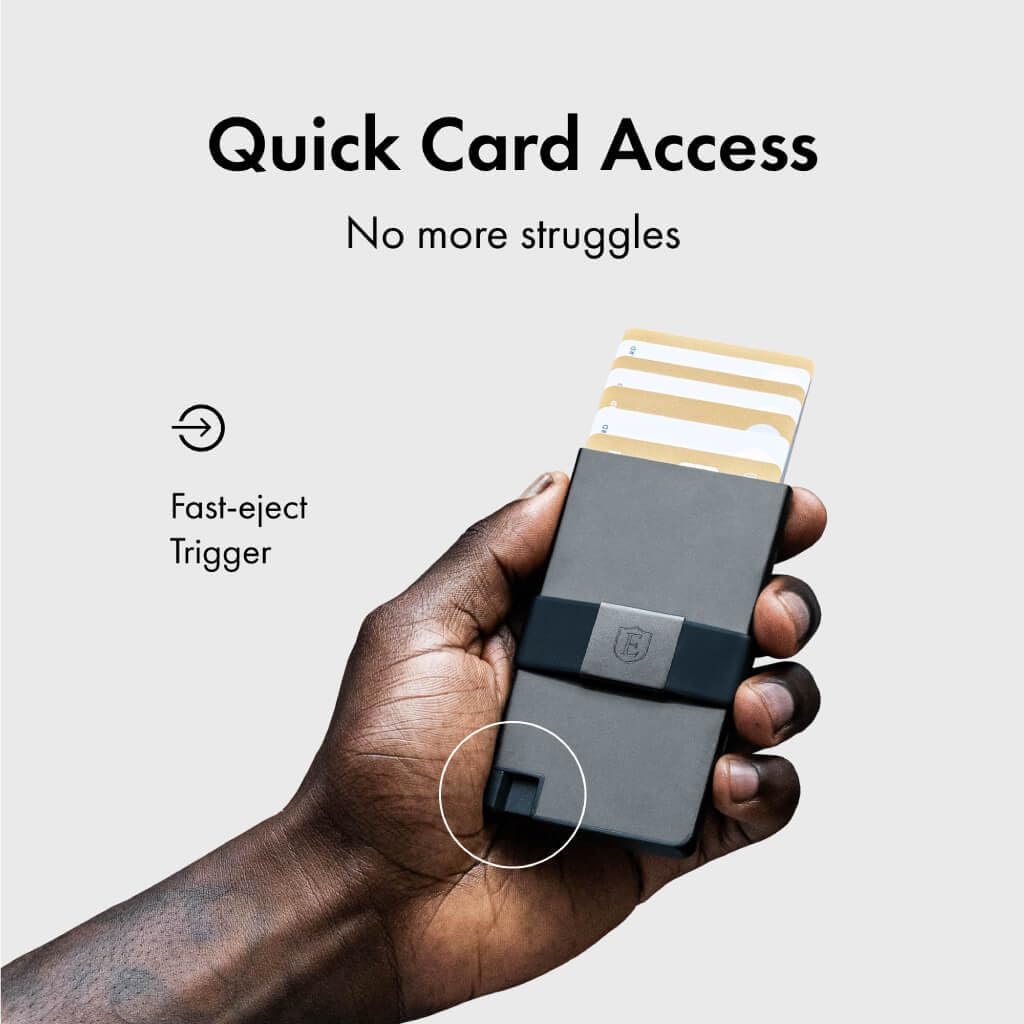
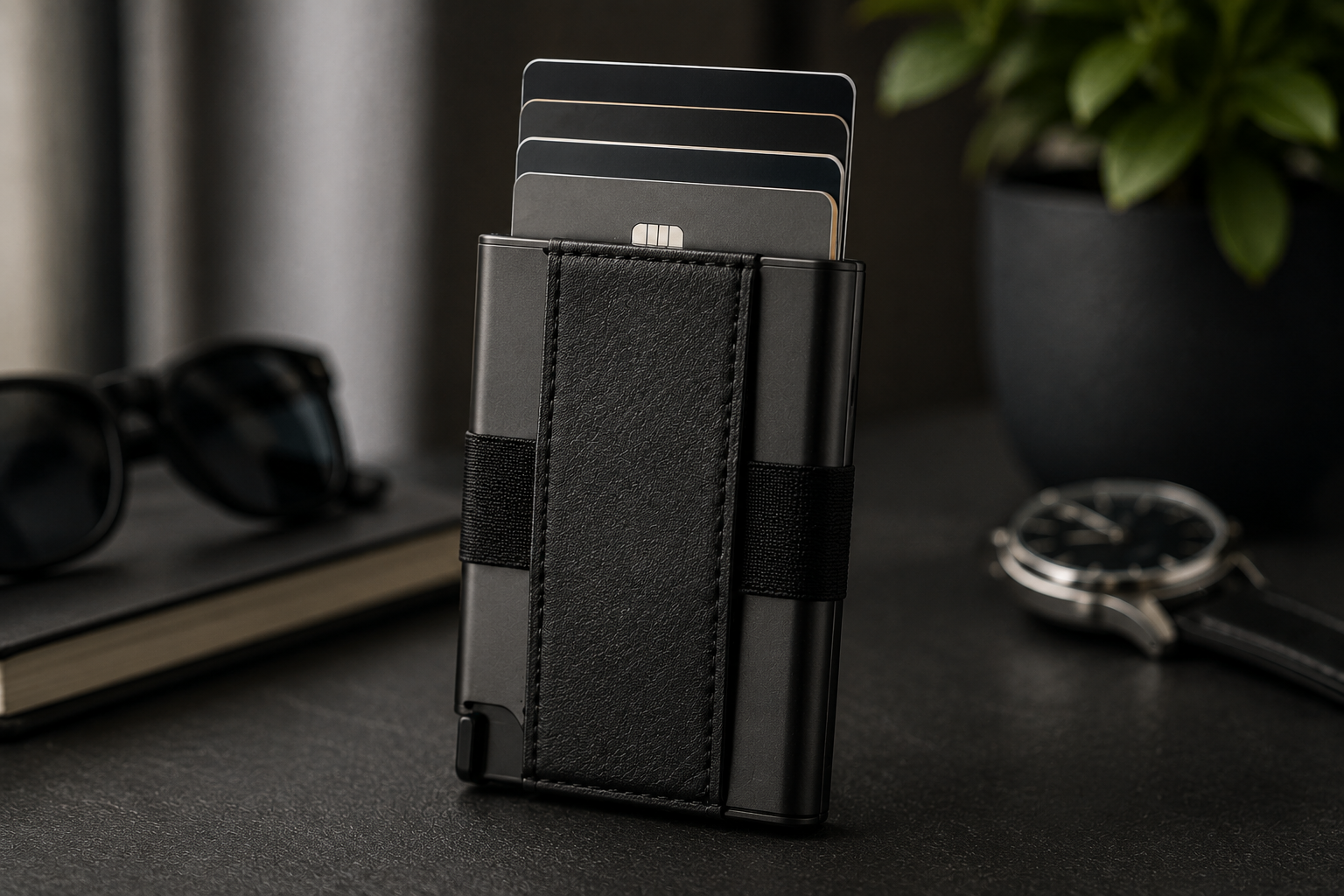
This is where the ejection mechanism proves its worth in real, everyday moments, boarding a train during rush hour, paying quickly at checkout, one-handed access without ever needing to remove the wallet from your pocket first.
Material Choice Changes Everything
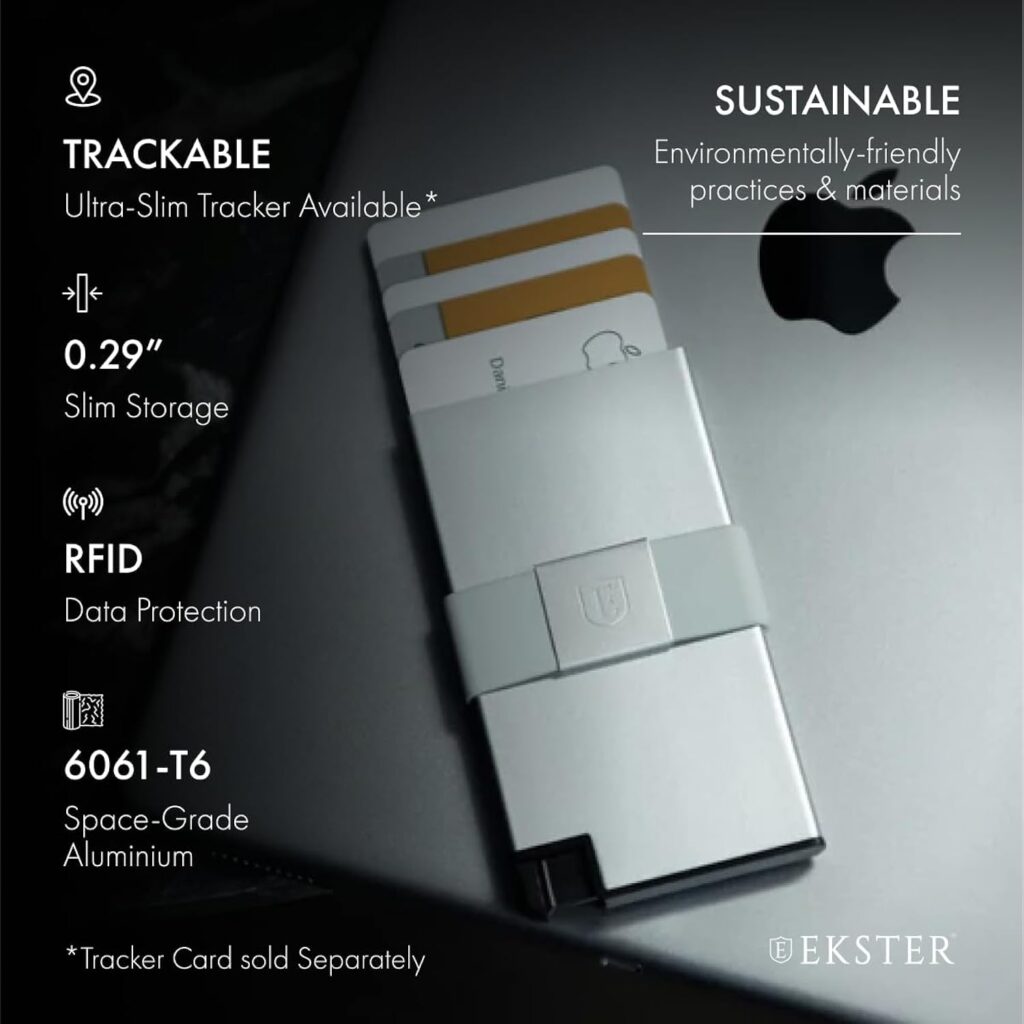
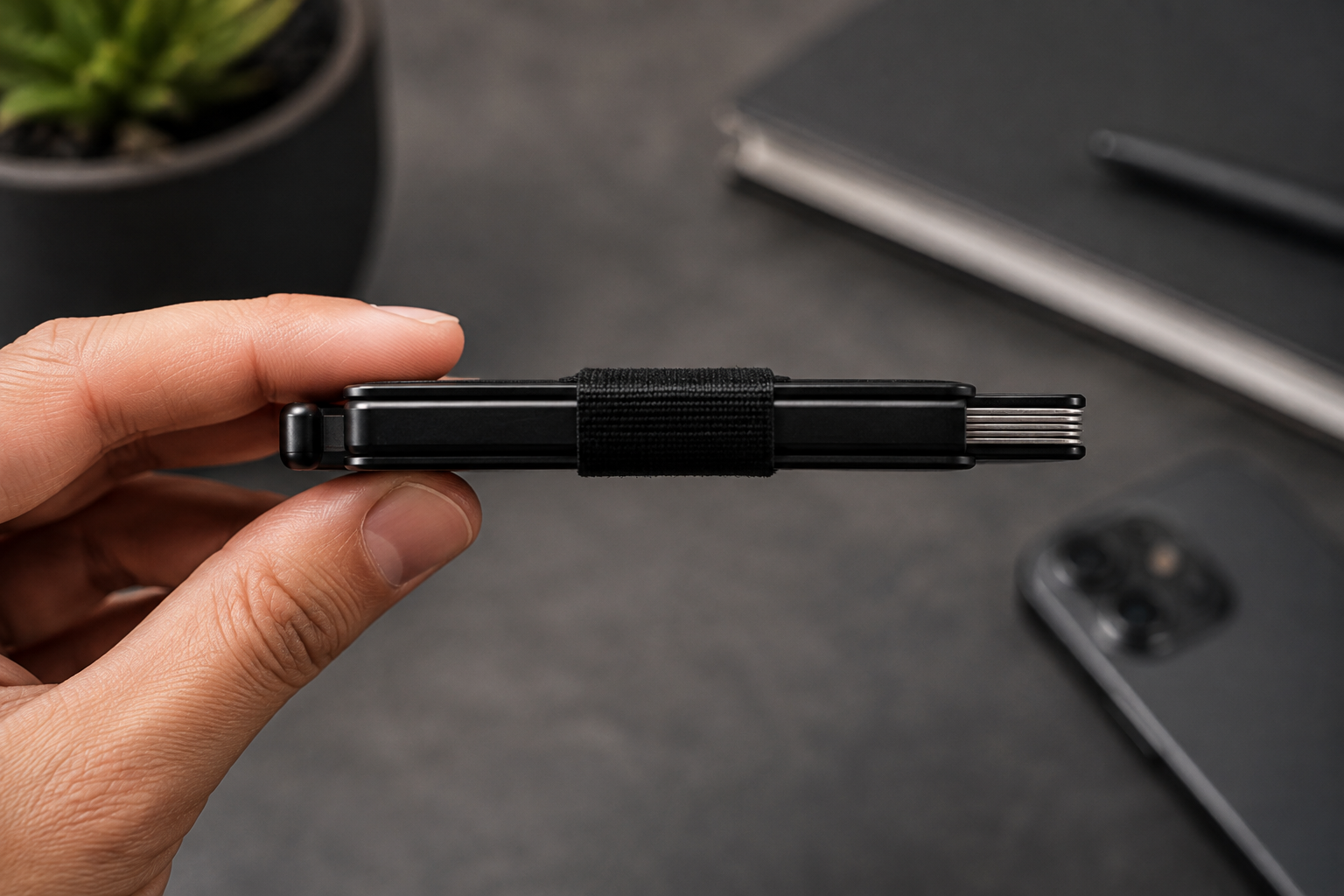
Slim wallets generally split into two material camps, each with real tradeoffs worth understanding before you buy. Aircraft-grade or space-grade aluminum delivers true minimalism and near-total durability, models like the Cardholder Pro sit under 0.6 inches thick even loaded with 7 cards, and the metal build naturally blocks RFID signals without needing an added lining.
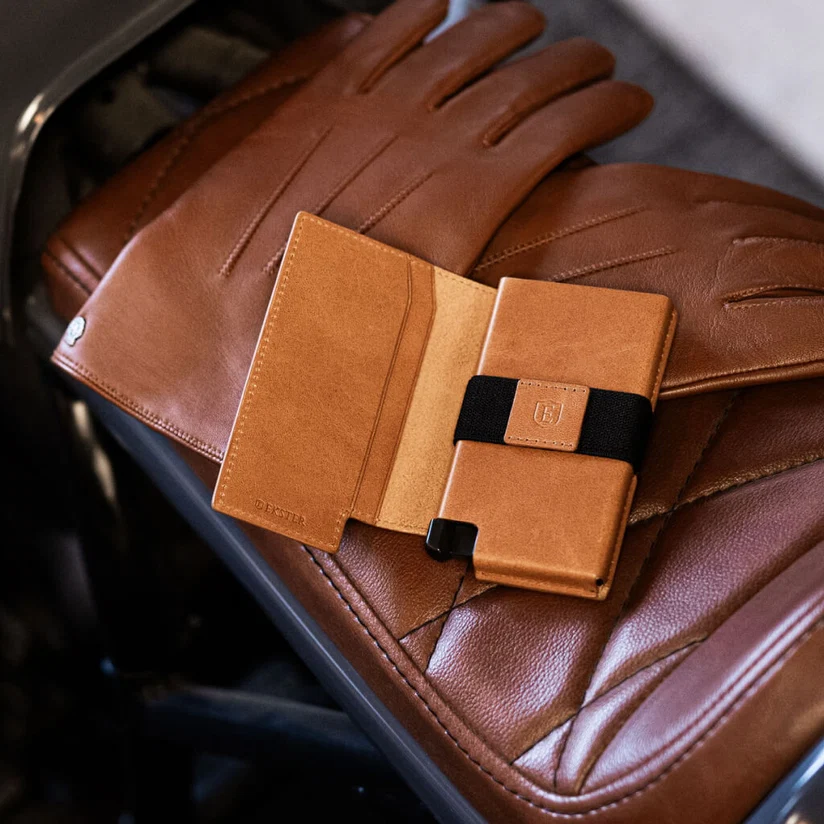

Full-grain or Italian leather options, like the Wallet Pro, trade a small amount of that ultimate slimness for a material that genuinely improves with age, developing character and softness over years of use rather than staying static. Some leather models need roughly two weeks of regular use before the flap softens and closes completely flat, worth knowing so you don’t mistake normal break-in stiffness for a defect.
RFID Protection Should Come Standard
At this point, RFID-blocking material is close to table stakes for any slim wallet worth buying, and it should never be a paid add-on. In aluminum wallets, the metal itself naturally blocks RFID signals without any extra lining required, while leather models need a built-in shielding layer to achieve the same protection.
Confirm this is included by default rather than assuming it, since not every wallet marketed as “minimalist” actually includes it standard.
The Pocket Test Most Wallets Fail
This is the single most practical test for any slim wallet, and it’s worth doing before buying rather than after. Loaded with your actual, real-world number of cards, does it sit flat in a front pocket, or does it create a visible bulge or outline through fitted pants?
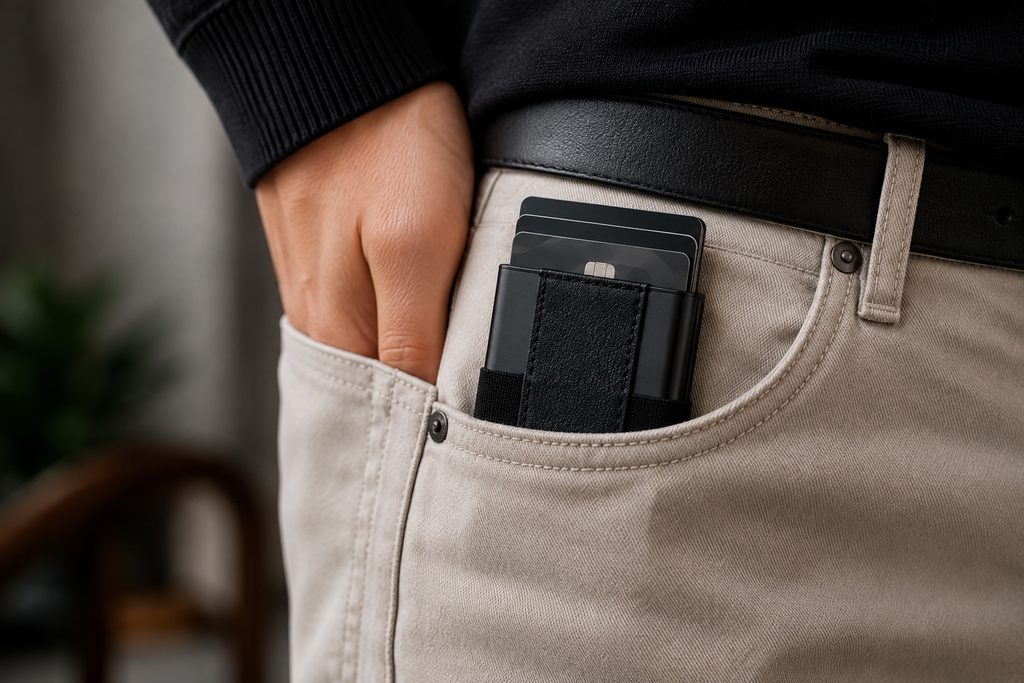
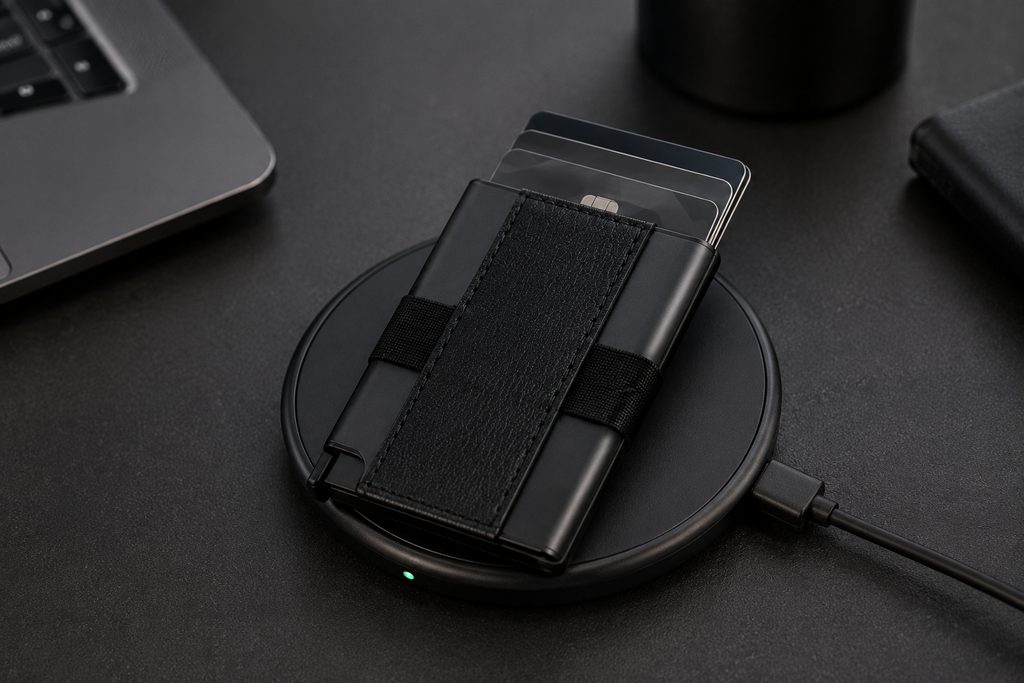
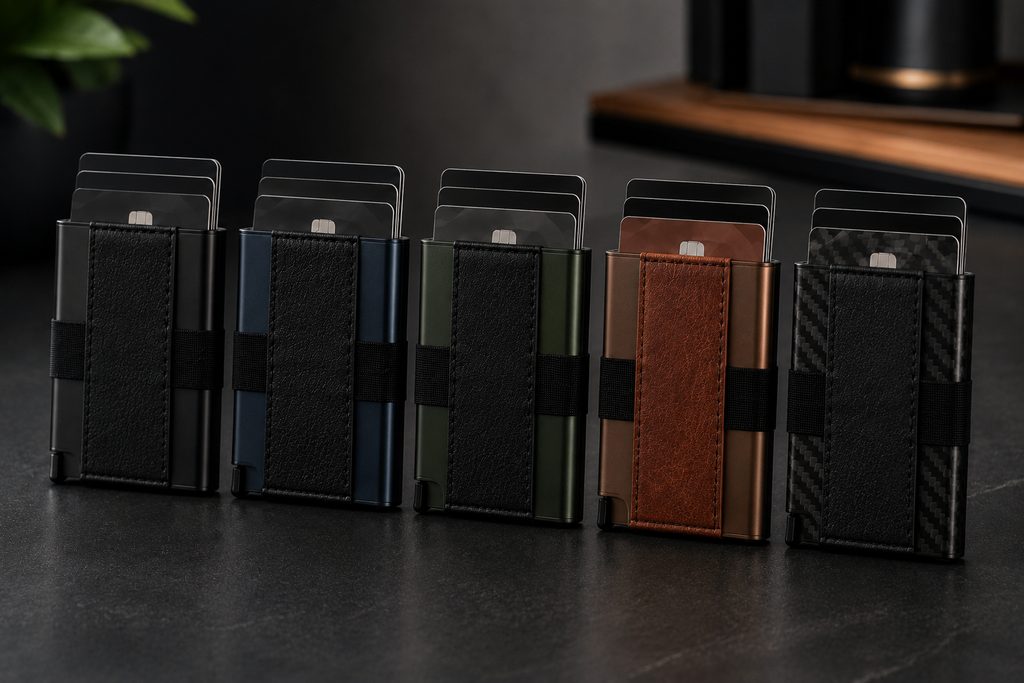
Aluminum models tend to disappear completely in a dress shirt or front pocket even loaded, while thicker leather bifold-style options can still create a visible outline depending on fit. If front-pocket carry is your priority, an all-metal design generally wins this specific test.
Expandability: Room to Grow If You Need It
Not everyone wants to permanently commit to a strict 6-card minimalist life, and the best slim wallets account for that with modular add-ons rather than forcing an all-or-nothing choice. Options like a cash clip, an expansion sleeve, or a tracker card let you scale a wallet up temporarily, for travel, for extra loyalty cards, without needing to buy an entirely different wallet for those occasions.
This flexibility is what separates a genuinely well-designed slim wallet system from one that’s simply small and rigid.
Comparison at a Glance
| Feature | Why It Matters | What to Look For |
|---|---|---|
| Card capacity | Determines real everyday usability | 6 to 8 comfortable slim carry, expandable beyond that |
| Access mechanism | Speed and convenience | Push-button ejection over manual slot digging |
| Material | Durability, feel, RFID protection | Aluminum for max slim, leather for character over time |
| RFID blocking | Protects against contactless scanning | Should be standard, not a paid add-on |
| Pocket fit | Real-world comfort | Test loaded with your actual card count |
| Expandability | Flexibility without buying a new wallet | Cash clip, sleeve, or tracker add-on options |
Frequently Asked Questions
How many cards should a good slim wallet actually hold comfortably? While many slim wallets advertise capacities up to 12 to 14 cards, testing consistently shows 6 to 7 cards is the real comfortable sweet spot for staying genuinely slim in a pocket.
Is aluminum or leather better for a slim wallet? Aluminum offers the thinnest possible profile and built-in RFID blocking without extra lining. Leather trades a small amount of slimness for a material that softens and develops character over years of use.
Do all slim wallets include RFID protection? Not automatically, though it should be considered a baseline feature on any wallet marketed as modern or minimalist. Confirm it’s included standard rather than assuming.
What’s the benefit of a card ejection mechanism over a standard slot design? It provides faster, one-handed access by fanning cards out at the push of a button, meaningfully quicker than manually digging through stacked slots, especially useful during transit or at checkout.
Can a slim wallet expand if I need to carry more sometimes? Yes, many slim wallet systems offer modular add-ons like cash clips or expansion sleeves, letting you scale up temporarily for travel or extra cards without switching wallets entirely.
The Bottom Line
A great slim wallet isn’t defined by thinness alone, it’s defined by how well it balances that thinness against real, everyday usability: enough card capacity for how you actually live, fast access without digging, RFID protection as standard, and a fit that genuinely disappears in a pocket rather than just claiming to. Test any candidate loaded with your actual cards before deciding, and don’t assume every wallet labeled “minimalist” delivers on all of these fronts equally.
Ready to see current styles and pricing? Check out Ekster’s slim wallets here.